


EP09 Invited Address 06 – On Shaping One’s Future: The Influential Role of Self-Efficacy – Albert Bandura, PhD
- Average Rating:
- Not yet rated
- Topic Areas:
- Invited Addresses | Psychotherapy | Motivation | Research
- Categories:
- Evolution of Psychotherapy | Evolution of Psychotherapy 2009
- Faculty:
- Albert Bandura
- Duration:
- 1 Hour 04 Minutes
- Format:
- Audio Only
- Original Program Date:
- Dec 12, 2009
- License:
- Never Expires.
Description
Description: This address traces how beliefs about personal agency shape motivation, resilience, emotional health, and the ability to change entrenched behavior. Drawing on decades of research, vivid clinical examples, and large-scale social interventions, it shows how self-efficacy is built through mastery, modeling, and meaningful action rather than insight alone. The talk moves fluidly from therapy rooms to global public health and social change, offering therapists and students a powerful framework for understanding how people learn to face fear, recover from setbacks, and reshape their lives and communities.
Syllabus Description: This address will present belief in one’s causative power as the foundation of human motivation, aspiration, accomplishments, and well-being. Whatever other factors serve as guides and motivators, they are rooted in the core belief that one has the power to make changes in one’s functioning and life conditions.
Educational Objectives:
- To describe the four ways for enhancing self-efficacy.
- To list the four processes through which self-efficacy works.
*Sessions may be edited for content and to preserve confidentiality*
Credits
Faculty
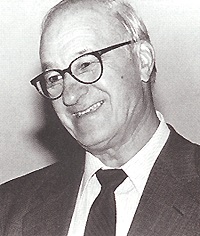
Albert Bandura Related Seminars and Products
ALBERT BANDURA, Ph.D., is Professor of Psychology, Stanford University. He has been elected to the American Academy of Arts and Sciences and the Institute of Medicine of the National Academy of Science. Dr. Bandura is a proponent of Self-Efficacy Theory. This theory and its diverse applications are presented in his recently published book, Self-Efficacy: The Exercise of Control.
Bandura has been responsible for contributions to the field of education and to several fields of psychology, including social cognitive theory, therapy, and personality psychology, and was also of incluence in the transition between behaviorism and cognitive psychology. He is known as the originator of social learning theory (renamed the social cognitive theory) and the theoretical construct of self-efficacy, and is also responsible for the influential 1961 Bobo doll experiment. This Bobo doll experiment demonstrated the concept of observational learning.